Showing posts with label A Few Bits of Potpourri. Show all posts

Egyptian Mau

As noted elsewhere in this book, mau was the ancient Egyptian word for cat. (And it’s no coincidence that mau sounds a lot like meow.) The Mau breed does resemble the cats depicted in the art of ancient Egypt.

It is possible the Maus are the direct descendants of those cats—but also possible that the breed was developed to resemble cats of ancient times. We do know for sure that Maus were imported from Egypt to Europe and the United States in the 1950s. Like the Ocicat, the Mau is spotted, a trait many people find appealing, and they are playful and affectionate.

-Philes and -phobes

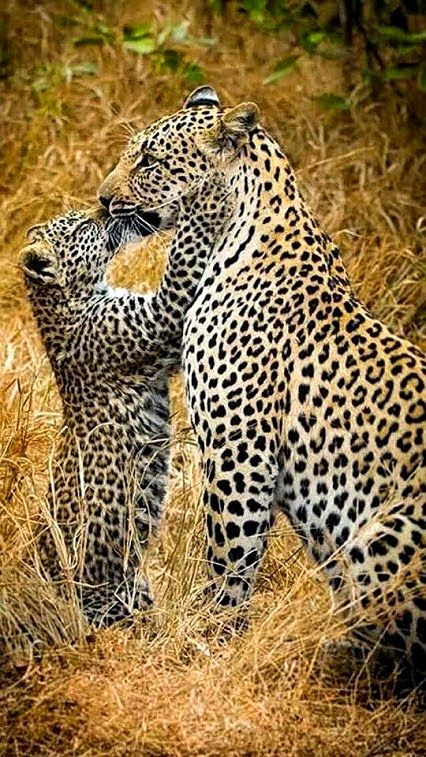
Leopards.
-Philes and -phobes

You are probably aware that an ailurophile is a person who likes cats, while an ailurophobe is someone who hates or fears cats.

Both words are rooted in the Greek word ailuros, meaning (surprise!) “cat.” (The Greek word philia means “love” and the word phobos means, of course, “fear.”)

Is it curable?

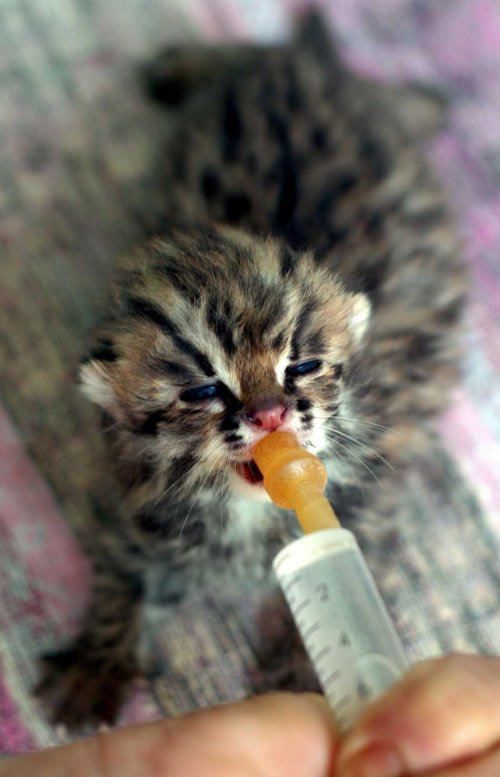
Adorable Baby Cheetah
Is it curable?

Cat lovers have a hard time comprehending ailurophobia, the fear or hatred of cats. But for some people it is very real, in many cases rooted in a childhood experience of being scratched or bitten by a cat. Some people have fainted at the sight of a cat, while others experience panic or anxiety attacks.

Considering how seldom cats attack people, is this fear “all in the head”? More importantly, is it curable? The good news is that, yes, any phobia is curable, and some ailurophobes have become avid ailurophiles. The bad news is that some people do not fear cats but actively hate them, and such people are unlikely to seek out a cure.

Name trends

Levitating leopard by Ashley Vincent on 500px
Name trends

There are trendiness patterns in human names, with some names popular at one time and then unpopular at others. (For example, in the author’s school days, there were lots of Cathys, Rickys, Lindas, Gregs, Marks and Tims—names rarely bestowed in our present flood of Brittanys, Jacobs, Ambers and Matthews.)

According to a recent issue of Cat Fancy magazine, the most popular names for female cats are: Muffin, Misty, Fluffy, Patches, Samantha, Tigger, Tabitha, Missy and Pumpkin. And for the toms: Tiger, Max, Charlie, Rocky, Toby, Sam, Smokey and (oddly) Mickey. We’ll check back with the magazine in about ten years to see if a new wave of cat names has come into vogue.

Cat stamps

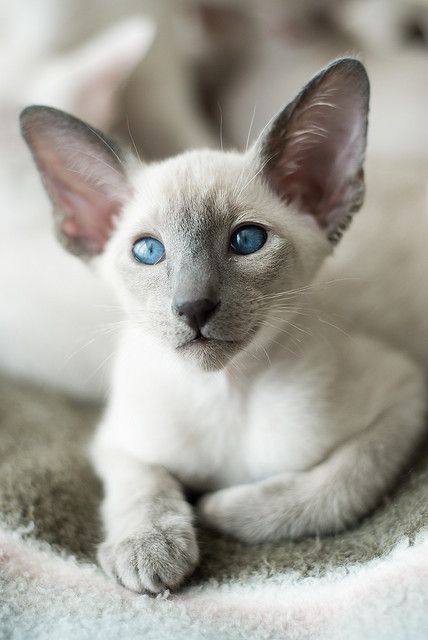
♥typical wedge head Siamese. Very cute!
Cat stamps

This won’t surprise you: there were official U.S. stamps featuring dogs before there were any honoring cats. Cat fans complained, and the Postal Service responded in 1988 with a set of four cat stamps, each featuring two breeds of cats, including (of course) an American shorthair and a Maine coon.

The stamps were given their public premiere at an appropriate place: New York’s Winter Garden Theatre, which at the time housed the long-running musical Cats. The stamps sold for twenty-two cents, by the way.

The spay stamp

Litter Size of Ragdoll Cat
The spay stamp

If you’re a stamp collector, you probably have seen the thirty-seven-cent U.S. stamp with the message “Spay or Neuter” and an image of either a puppy or a kitten.

Some people jokingly refer to it as the “Bob Barker stamp,” because of the TV game show host’s longtime advocacy for spaying and neutering pets.

Mouser Towser

Ragdoll kitten - this is where we got our cats Chipper & Fletcher from.

Scotland’s landscape is dotted with the many distilleries that produce world-famous Scotch whiskey. Where there is whiskey, there is grain, and where there is grain, there are rodents, so cats have long been an essential part of the distillery scene.

One of the rodent killers at the Glenturret distillery, a cat named Towser, died in 1987, having killed approximately 29,000 mice in his lifetime.

Pack rat

OMG! Look at that fluffiness!

Detestable as rats are, they are actually intelligent creatures, much more capable of social organization than cats are. The black rat (Rattus rattus) is one of the most intelligent species, and it also happens to grow up to eighteen inches in length.

Couple that size with the fact that black rats learn to fight in packs, and you can see that cats over the centuries have had their work cut out for them. Fighting large, intelligent and organized rats requires speed and courage on the part of cats.

Catgut (the real thing)

Sweet kitty
Catgut

While the so-called catgut used in violin strings is (thankfully) not made from cat intestines, real catgut has in fact been used in other musical instruments.

In Japan, a plucked stringed instrument called the samisen, somewhat like a banjo, has strings made from actual catgut—and with a cat skin stretched across its soundboard.

Beauregard of Richmond

I can't get down
Beauregard of Richmond

Artists like cats, and so museums and galleries often have their resident cat (or cats). Appropriately, in the 1990s the resident cat at the Virginia Museum of Fine Arts in Richmond had a good Confederate name, Beauregard.

The plump gray-brown tabby often wandered around the museum’s classrooms and sometimes became an unpaid model, situating himself near the seated (and usually naked) human model.

Cat people, as proven by their names

Cat people, as proven by their names

Know anyone named Katz, Gatti, Duchat, Lechat or Gatteschi? All these surnames are some variation on the word cat in one European language or another.

How did any family come to have a “catty” name? One theory is that a family decided to include a cat in its coat of arms—no doubt out of affection for cats, but also because of admiration for some quality of cats, such as stealth, swiftness or beauty.

Two mice-cats per ship

lostmynoseinabook: My new bookmark :)
Two mice-cats per ship

Cats don’t like water, but, oddly, they travel well by sea, since they don’t get motion sickness. It was discovered long ago that they will serve as rodent exterminators on ships as well as on land, and ships are never without rodents.

Back in the 1600s the value of cats at sea was realized by Jean Baptiste Colbert, the head of France’s treasury under King Louis XIV. Hoping to keep rodents—and thus disease—at a minimum on French ships, Colbert mandated that all ships leaving French ports should have a minimum of “two mice-cats” on each ship.

Feline fest

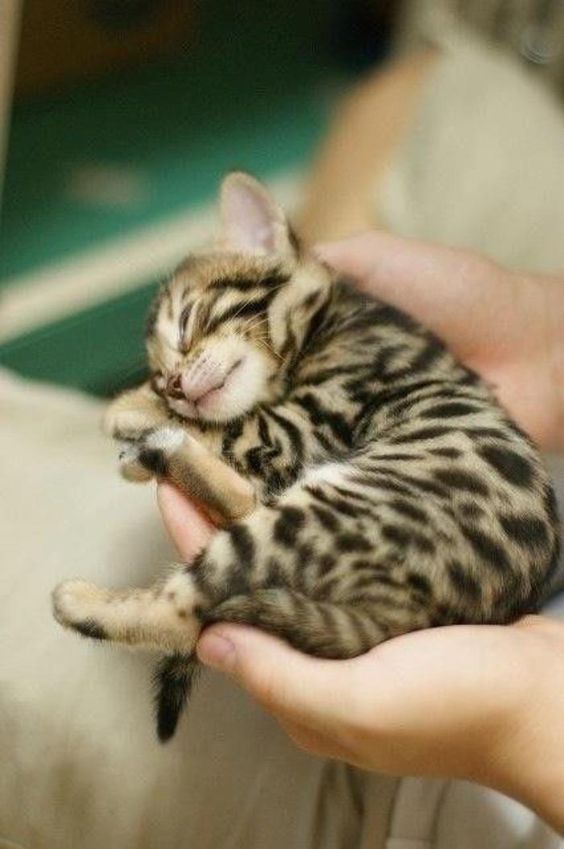
Little cute bengal kitten sleeping in hands...
Feline fest

In Belgium, the city of Ieper (that’s a capital I as in “Irving”) hosts a cat festival every three years, partly in the spirit of fun and partly to atone for the cruel treatment of cats in the Middle Ages, when Ieper and other cities applauded as droves of cats were slaughtered.

The Ieper parade features people in cat costumes, an enormous “queen cat” float, the Norse goddess Freyja in her cat-drawn chariot “witch cats” frolicking in mobile cemeteries and other feline floats, balloons and vehicles. Even in the years when there isn’t a cat festival, the city bears the nickname kattenstad, “city of cats.”

Cat or horse?

1,2 cha cha cha 3,4 cha cha cha
Cat or horse?

Horses were and still are symbols of social prestige. In times past, a man who owned horses was clearly higher on the social scale than the mere commoner who had to (horrors!) walk from one place to another.

This was true in China as in every other place, but the Chinese had a proverb that put things into perspective: “A lame cat is better than a swift horse when rats infest the palace.”

Put another way, the symbols of power don’t always amount to much. Horses might impress the population at large, but the palace is as subject to ruin by rodents as the poor man’s hut is.

The artsy hotel cat

this little kitty could live on my farm..too cute #wildskyapothecary
The artsy hotel cat

You can safely assume that any place where artsy and literary people gather might be open to having a cat around. That is certainly true of the famous Algonquin Hotel in New York City. Located in the city’s theatre district, the hotel has long been a gathering (and drinking) place for the artsy set.

Rumor has it that the first “Algonquin cat” was Rusty, who was taken in in the 1930s after he played in a Broadway show. The hotel cat is generally given the run of the place and, needless to say, never goes hungry.

Pursuing cats trivially

And this tiny kitten with perfect paws.
Pursuing cats trivially

The game Trivial Pursuit became all the rage in the 1980s, but it wasn’t until the 1990s that a cat version became available. This was Cat-a-Muse, distributed by GAMES 2000.

The object of the game is to be the last surviving cat. Players answer questions from various cat-egories and face numerous catastrophes before the game concludes. The game is a pleasant way to learn facts about cats.

The Key West cathouse

Refrigerator cat
The Key West cathouse

A business at 411 Green Street in Key West, Florida, sells all sorts of cat merchandise—figurines, pictures, posters, T-shirts. It is called the Cat House, and its Key West location is appropriate, given the city’s connections with Ernest Hemingway.

The story goes that the building was, in an earlier time, the more traditional type of cathouse that is, a house of prostitution.

No, not what you think

No, not what you think

In the town of Sebring in southern Florida you can visit “Florida’s Only Legal Cathouse,” not a whorehouse but a restaurant, which of course is decorated with thousands of cat paintings, photos and figurines.

The Cathouse’s restrooms are referred to as the “Sandbox,” and a private dining room is the Persian room. The many decorations are actually the gifts of restaurant patrons.

Stuffed cat

Stuffed cat
Stuffed cat

When we think of taxidermists, we think of people who stuff and preserve wild animals, but one person who specialized in stuffing pets, cats in particular, was the Englishman Walter Potter, who not only practiced his art on the bodies of cats, but liked to pose and dress the cats in human settings, such as weddings. The Victorians, who had a kind of “cuteness cult,” were quite fond of Potter’s preserved-cat art.

Lion-taming, on a modest scale

Lion-taming, on a modest scale

Every circus and variety show used to have a trained dog act, but it was widely assumed that cats are untrainable, because they are so individualistic and independent. This is largely true, but in fact there have been a few “cat acts” in history. In Italy in the 1800s, Pietro Capelli began training the street cats he had befriended.

To his great surprise and delight, he found cats could learn to juggle with their hind legs, walk on tightwires, play toy musical instruments and do other feats that dazzled audiences, even the jaded rich. Amazing what time and love and patience will do.
Related Posts with Thumbnails